Showing posts with label tax culture. Show all posts

Thursday, 27 June 2013

New Taxpayer Right in Canada: No Reprisals for "Service" Complaints

From the Canada Revenue Agency website: Harper Government launches new right to ensure Canadian taxpayers are treated fairly [french version here]
The new right says:
16. You have the right to lodge a service complaint and request a formal review without fear of reprisal.   
We know that to be trusted, effective, and efficient, we must conduct ourselves ethically and honestly, and the CRA strives to do so every day. Our employees are expected to act in accordance with the CRA Code of Ethics and Conduct and the Values and Ethics Code for the Public Sector. These codes are terms and conditions of employment and they reinforce our commitment to serve the public with integrity, professionalism, respect, and cooperation. This right means that if you lodge a service complaint and request a formal review of a CRA decision, you can be confident that the CRA will treat you impartially, and that you will receive the benefits, credits, and refunds to which you are entitled, and pay no more and no less than what is required by law. You should not fear reprisal. We are required to apply the law and relevant CRA guidelines and policies, which may include the charging of penalties, or requiring the payment of your debt. When CRA employees act in accordance with the law, these do not constitute acts of reprisal. If you feel that you have been subject to acts of reprisal, the CRA wants to hear from you. We take your concerns seriously. Tell us about them by completing section 3 – Reprisal Complaint on Form RC193, Service‑Related Complaint. We can assure you that we will address your complaint, and that we will send it directly to an investigation office located at CRA Headquarters. This will ensure that the investigation is conducted independently of the office associated with the complaint.
At a meeting with members of Certified General Accountants (CGA) Canada to discuss taxpayer fairness, Minister Gail Shea stated:
“Our Government is committed to ensuring that all Canadians are treated with fairness and respect by the Canada Revenue Agency. In our system of voluntary compliance, taxpayers must have confidence in the objectivity and fairness of CRA’s actions as a tax administrator. This new addition to the Taxpayer Bill of Rights will help reinforce public confidence in Canada’s tax system, and ensure that Canadians taxpayers feel free to speak up if they have a disagreement with the CRA.”
 Curiously, the CRA website adds the following:
Although there is no evidence that Canadians have been subject to reprisal by the CRA, in his work across the country, the Taxpayers’ Ombudsman heard that taxpayers would sometimes hesitate to lodge a complaint for fear of being treated differently afterward. To address this unwarranted fear and encourage Canadians to speak up if they have a disagreement with the CRA, the Ombudsman recommended that a new right be added to ensure Canadians are confident they will be treated fairly. 
The Taxpayer Bill of Rights is an agency statement that lacks the force of law, but many of its rights are legislated (via the Charter or otherwise). This new right aligns with observed attempts by tax agencies to present themselves as "service-oriented," that is, as if taxpayers were customers. It remains to be seen if and how taxpayers will avail themselves of this newly articulated right.

Tuesday, 28 May 2013

Apple's simple design interface most certainly does not extend to its tax department.

Lee Sheppard has an article today on Apple's tax tricks [gated] where she works through Apple's multinational structure & planning detailes as outlined in the Senate Homeland Security and Governmental Affairs Permanent Subcommittee on Investigations (PSI) report. You should read the whole article, but here are some of its key concepts:
We're ... not easily shocked by transfer pricing practices that the U.S. government accepts, for better or worse. ...But Apple's planning ... is a special case . We're talking gross worldwide revenues the size of the California state budget, and no tax being paid anywhere on a huge chunk of profits. What is truly surprising about the Apple case is its brazenness. PSI concluded that Apple's self-serving intercompany contracts had no effect on its business practices.
...Nearly two-thirds of Apple's revenue comes from foreign sales. According to the PSI report, this foreign income is routed through Ireland and may be taxed nowhere, not even in Ireland. ... 
Apple Operations International (AOI), Apple's Irish-registered holding company, acts as an internal finance company. ... AOI claims tax residence nowhere.
Apple Sales International (ASI), an Irish principal company that manages Apple's supply chain and sales to Europe and Asia, is a subsidiary of Apple Operations Europe (AOE), which is a subsidiary of AOI and has employees and operations. ASI has 250 employees and deals with Apple's third-party Chinese manufacturers. 
ASI claims no tax residence anywhere ... [emphases added].
When I heard these statements--more than once--in the hearings, I wondered why on earth the Senator who was asking at the questions at the time didn't stop right there and say hold on, are you telling us that these companies exist, we are supposed to treat each as a separate taxpayer and respect its independence from the parent company for tax purposes, and accept at the same time that each resides for tax purposes in no country anywhere?

Let's be clear: humans never get away with these kinds of arguments. You might be resident in many places but I think it is very hard to claim that you are resident nowhere--governments always seem to find some reason and some way to claim you. But somehow the Senator didn't challenge this troubling statement.

If the challenge had come, we might have heard a not-so-simple design explanation from Apple, such as that the subsidiaries are incorporated in Ireland, which would make them Irish residents for US tax purposes, but for Irish tax purposes each is resident in Bermuda, while for Bermuda purposes each is resident in Ireland or at least not resident in Bermuda; either way, certainly neither is resident in the United States even though both are clearly controlled from California.

Simple, clean, one button design interface Apple's corporate structure is not.  Funny how Steve Jobs' vision was, and now Tim Cook's vision is, so different for the tax department. Yet this basic structure is, I must hasten to repeat, perfectly, unequivocally legal, understood and accepted and in many ways even facilitated by governments all over the world including and perhaps especially the United States with its deferral regime.  But that doesn't mean the whole structure is similarly straightforward from a legal compliance perspective. More from Lee:
Apple conducts all of its research and development in the United States. Apple Inc., the U.S. parent, has a cost-sharing agreement with AOE and ASI, which pay 60 percent of the cost of this research. Apple's intellectual property is in the United States with the U.S. parent, Apple Inc. Apple told PSI that it divides R&D costs according to worldwide sales revenues.
This arrangement, Lee tells us, dates back to a more permissive time in cost sharing regulatory history and would probably be protected from today's more stringent requirements. Lee observes:
...AOI has no employees; its American board members, who are Apple executives, hold their meetings in California, often without the participation of the lone Irish director. Apple's tax director told PSI that he believed AOI is not managed and controlled in Ireland. Apple told PSI that AOI has not paid income tax to any government for the past five years.
...Ireland takes the position that it is a legitimate low-tax country that only permits the 12.5 percent rate for income from trade, an ancient English concept that appears to require a ruling. Yet Apple told PSI that Ireland permitted an income calculation that enabled Apple subsidiaries to pay Irish corporate income tax at a rate of 2 percent or less. 
Lee wonders if this puts Ireland in a troublesome place vis a vis EU law which prohibits burying state aid within generally applicable tax laws, especially since Ireland is already getting some heat for changing its laws "to accommodate the numerous U.S. multinationals that use it to shelter European sales income." She then works through US domestic tax law and the US-Ireland treaty to show that AOI could very well be viewed as being taxable in the US, yet its income probably wouldn't be subject to tax in any event given the rather complex, internally inconsistent, but overall taxpayer friendly rules of subpart F and its ancillaries.

All in all Lee runs through of some of the more arcane complexities of the US international tax rules in this article, and makes a pretty persuasive case for viewing the system as hopelessly absurd in the extreme.  Tim Cook says he wants to change that, that he's all for a simpler, cleaner interface for the tax code. But remember that very often when someone says they want simplicity, what they really just want is to be able to pay (even) less tax.

Thursday, 25 April 2013

What tax lawyers mean when they opine on the likelihood of success on the merits

I posted this on Twitter yesterday but for those not of the twitterverse, you may enjoy this guide to tax opinion standards, posted recently at Canadian Tax Litigation blog:

Percentage chance of success...Standard of Opinion 100% Will
99% Will, at the Ivory Soap level
98% Will, almost certainly
97% Will, almost all the time
96% I would be astounded if we lost
95% I would be very surprised if we lost
94% We will not lose this one
93% It had better be right
92% I would tell my mother-in-law to do this
91% I would tell my mother to do this
90% I would tell your mother to do this
89% Like crossing the street
88% It's in the bag
87% They don't get much better
86% You don't need an opinion
85% Why are you asking the question?
84% It’s almost in the bag
83% One could imagine a "will"
82% Stronger than a strong should
80% Strong should
79% Essentially, a strong should
78% Better view is a strong should
77% Not without hesitation, a strong should
76% Better than a good should
75% Good should
74% Odds are high
73% Remarkably likely
72% Very likely
71% Better than a weak should
70% Weak should
69% We expect to win
68% In all probability
67% In all likelihood
66% Looking good
65% Should probably
64% Most likely
63% Likely
62% Favourable prospect
61% Not without hesitation, should
60% Not a bad prospect
59% Reasonable prospect
58% Fair prospect
57% Well-grounded hope
56% There is reason to expect
55% Better view
54% Ought to be right
53% Not without hesitation, the better view
52% More likely than more likely than not
51% More likely than not
50% Your guess is as good as mine
49% Less likely than not
48% Less likely than less likely than not
47% Almost there
46% I hesitate to predict
45% Depends on the day of the week
44% If we get the right judge
43% A very good shot
42% A good shot Percentage chance of success Standard of Opinion
41% It arguably could work
40% It arguably might work
39% G-d willing
38% Depending on the facts
37% There are good arguments
36% Could be in the cards
35% Stranger things have happened
34% Throw of the dice
33% As taxpayer's counsel, I would not be ashamed to argue this in court
32% Not without considerable doubt
31% With some good fortune
30% Might
29% Might be argued that
28% Stands a chance
27% Might stand a chance
26% It could be that it might work
25% I might be that it could work
24% Not very likely
23% Conceivably
22% Conceivably, but not hopeful
21% I've seen worse
20% Perhaps arguable
19% Within the bounds of possibility
18% Maybe
17% Maybe, but not likely
16% Not likely enough
15% Possible, but not likely
14% Maybe Enron would do this
13% As a DOJ lawyer, I would not be ashamed to argue this in court
12% It should work, but it won't
11% It could work, but it won't
10% It might work, but it won't
9% Tell them you didn't know
8% Perhaps if nobody finds it
7% You have got to be joking
6% Anything can happen, but this won't
5% You must not understand the legislation
4% Canadian jails aren't bad
3% I wouldn't wish it on my enemies
2% Not bloody likely
1% Not in a month of Sundays
0% Not 

Monday, 22 April 2013

The Boundaries of Tax Justice

I posted a draft of this paper on SSRN some time ago but neglected to post it here, so here it is. I argue that because governments chase wage-earners and consumers doggedly while selectively overlooking or ignoring other taxpayers, the imposition of income taxation as it is practised by states today is fundamentally unjust. Abstract:
The story of our time may be the awakening of society to an epidemic of global tax dodging by the world’s elites. Citizens, watchdog groups, and even government officials are puzzled, frustrated, and sometimes outraged by the phenomenon, wondering where the nation-state lost its way in regulating its people and its resources, and why it is standing by, apparently helplessly, as its tax base erodes while austerity measures undermine the welfare state. This paper demonstrates that the sequence of tax base erosion-austerity-welfare state erosion is a story about a crisis of tax justice. It does so by revisiting how Canada's historic Royal Commission on Taxation, in its search for guiding principles for tax reform, turned to tax justice as the central component for any tax system. It shows why nations have consistently failed to meet these guiding principles, instead taxing the easy-to-tax more or less comprehensively, the hard-to-tax more or less randomly, and the impossible-to-tax not at all. It demonstrates that the result is that no state today imposes taxation justly: instead, taxation as exercised around the world today is overwhelmingly characterized by arbitrariness and injustice. The paper concludes that if governments cannot or will not pursue justice in taxation, they have at minimum a duty to explain to society why this goal is no longer worthy of pursuit.
This paper includes a discussion of who should be considered a "taxpayer" by a state. I argue that citizenship-based taxation is unjust from both a human and statist perspective, and I therefore make the case for residence-based taxation. As always, comments are welcome.

Friday, 12 April 2013

Upcoming conference on tax & philanthropy

Over at Philanthropy blog Lucy Bernholz alerts us to an upcoming conference in DC  (to be webcast) on "The Charitable Deduction in American Political Thought," in which participants will discuss the charitable deduction's "deepest dimensions as an expression of fundamental American political principles." And there is required reading:


Neither of which I've read so I had better get going. 


Monday, 8 April 2013

France ups the ante for EU tax evasion

Cahuzac's denials and ultimate admission about hiding money offshore while serving as the anti-evasion officer-in-chief is very embarrassing for France, and so it should be no surprise to see the rhetoric heat up as new allegations surface about his attempts to move the money around in an ultimately futile attempt at subterfuge. From AFP:
J'ai dit quoi?

France said Sunday [ed: France is a country and cannot speak. It is not so difficult to write "French leaders said", and it is ever so much less distracting.]  it was looking to tighten Europe-wide measures against tax evasion as it scrambles to contain a fraud scandal that has rocked President Francois Hollande's government.
...Finance Minister Pierre Moscovici announced that France would seek to reinforce the exchange of banking information throughout Europe, based on a US ruling in place since 2010 that seeks to fight offshore tax evasion.
Well, the "rule" may have been in place but let us recall that it is not in fact yet in force...three years later, we're still working out the kinks over here, and there are many, many kinks.

More:
"I propose that there be an automatic exchange of information, a European FATCA," Moscovici said on Europe 1 radio.
Hollande's government has been shaken by the scandal, which erupted Tuesday after Cahuzac -- once in charge of tackling tax evasion -- admitted to investigators that he had a foreign account containing some 600,000 euros ($770,000). 
...Critics have been quick to round on Hollande and his ministers, accusing them of either trying to cover up the scandal or of mismanagement for having believed Cahuzac's denials.

...Hollande has tried to contain the fall-out from the scandal, saying he was unaware of the account and announcing Wednesday that a new law would be submitted within weeks that will establish greater control over ministers' wealth. 
The law would also ban any elected representative found guilty of tax fraud or corruption from holding any form of public office.
Query whether there would be enough people left to run the world if every country made this same pledge.

Tuesday, 2 April 2013

To understand why citizenship-based taxation is objectionable, consider the STEM Jobs Act of 2012

Victoria Ferauge explains in as clear a way as may be possible why it is important to understand what people mean when they talk about citizenship-based taxation, and why the US effort to impose it with the big stick of FATCA is so objectionable to Americans living in other countries (also known as "immigrants" in those countries). She makes a number of points but I wanted to highlight one here:
In the [dialectic on Americans living abroad, which equates expatriation with tax evasion] it seems not to have occurred to the American public or its lawmakers that the people they are trying to attract [through immigration policies aimed at high-skilled workers] are the product of other countries' investments in producing a well-educated populace
In light of that, consider what the Heritage Foundation says about the STEM Jobs Act of 2012:
American businesses are struggling to fill high-skilled employment opportunities. STEM jobs grew at over three times the pace of non-STEM jobs between 2000 and 2010 and are expected to grow almost twice as fast by 2018. Business groups have spent years urging Congress to reform the visa system in order to fill these empty positions.
Enhancing the ability of high-skilled workers to enter the U.S. would be an asset to the nation’s economy as well as its indebted government. 
In case the instrumentalist nature of our interest in immigrants is not clear, the point is we're going to make these foreign-born, foreign-raised, foreign-educated, now high-skilled, highly-paid workers a permanent part of the American taxpaying public, which can increasingly be defined as the American wage-earning public. One may be forgiven, perhaps, for juxtaposing this deep thirst for foreign talent against America's ongoing disinvestment in its own social infrastructure, including public education (also helped along by the Heritage Foundation).

Victoria's post thus seems to me to contain the contours for constructing the normative case for taxing humans. There is much to be done on this topic, but it seems clear that the practice of admitting immigrants at all, let alone actively seeking highly-skilled ones, demonstrates that inbound human mobility is a social good that states support; that inbound human mobility (perhaps especially of the high-skilled kind) may be the product of rather intense social investment by some other country; and that conversely taxing on the basis of citizenship regardless of residence is a means of preventing outbound human mobility and so runs strictly counter to the overall good of human mobility while also being hostile to the aims of other countries also seeking inbound labour.

The US has long objected to onerous fiscal controls on the capital it sends across borders, so it seems particularly difficult to understand the ongoing support for placing onerous fiscal controls on its outbound labour supply. Contextualize that observation within the story of the shift of taxation from capital to labour over the past 50 years, however, and a pragmatic explanation is easily ascertained. But pragmatism does not make the normative case. In fact, it violates the conventionally-understood major normative factors for assessing taxation--efficiency, administrability, and fairness--because it introduces an insurmountable amount of arbitrariness. This topic deserves much more thinking than has been allocated to it by tax policy observers, including myself.

There is much more at the link, please do go and read Victoria's whole post.

Tuesday, 26 March 2013

How to Make America a Global Tax Haven

Isn't it astonishing that at the very moment the USA is twisting arms the world over ostensibly to crack down on tax havens and the erosion of the tax base they help perpetuate, Bloomberg could run this headline without irony or shame, and we can get a brand new quote from yet another American lawmaker about the virtues of making the US a tax haven. This time it's not Paul Ryan who wants to "make America a tax shelter" but his friend Devin Nunes, who says the US ought to abandon corporate income tax, and substitute for it a cash flow consumption tax, in order to "make the U.S. the largest tax haven in human history."

You just cannot make these things up. You remember Nunes, I hope--yes, that's him, the co-chair of the international working group on tax reform convened by Camp & Levin. Yes, that Levin, the one that wrote FATCA, the legislation that is supposed to stop Americans from cheating on their taxes by using other countries as tax havens.

Of course you can say that in substance the two are very different--Levin's focus is to stop Americans hiding cash overseas in foreign bank accounts, while Nunes just wants to let corporations pay less tax on the income they earn in the US. And a cash flow consumption tax might not be evil. But using the tax haven and tax shelter rhetoric as a marketing strategy is objectionable. Either you think tax havens and tax shelters are an abuse of the rule of law, in which case you shouldn't try to turn your country into one, or you think they're just dandy in which case you shouldn't try to shut everyone other country down  to capture the market for yourself.


Wednesday, 6 March 2013

Anti-austerity Protestors in Portugal: "Screw the troika, we want our lives back"

Austerity is spreading across the globe like a bad virus, despite the vehement opposition of the general population. In Portugal, thousands of demonstrators have held marches across the country in protest. From Al Jazeera:
Tens of thousands of people filled a Lisbon boulevard during Saturday's protests and headed to the finance ministry carrying placards saying "Screw the troika, we want our lives back". 
The troika is a reference to the European Commission, the International Monetary Fund and the European Central Bank, the lenders behind the country's financial bailout. 
Many protesters were singing a 40-year-old song linked to a 1974 popular uprising known as the Carnation Revolution. 
Portugal is expected to suffer a third straight year of recession in 2013, with a two percent contraction. The overall jobless rate has grown to a record 17.6 percent. The marches were powered mostly by young people among whom unemployment is close to 40 percent.
 ...After several years of tax increases and welfare cuts, austerity is poised to deepen as the government looks for another $5.2bn to cut over the next two years. The national health service, education, pensioners and government workers are likely to be the hardest hit. The government is locked into debt-cutting measures in return for the $102bn financial rescue set up in 2011.  
More tax hikes and spending cuts are on the way for Portugal: when it comes to the IMF, you must pay your debts regardless of the consequences. That was always the IMF way of course, but when austerity plus regressive taxation was being imposed on impoverished countries with disastrous social and economic results, the global North didn't seem too bothered by it. One protestor in Lisbon is quoted as saying, "This government has left the people on bread and water, selling off state assets for peanuts to pay back debts that were contracted by corrupt politicians to benefit bankers." That scenario is lifted straight out of the IMF's playbook throughout Africa in the 1990s.

Sunday, 24 February 2013

Taxpayer morale--a case study in Detroit

Someone could write a PhD dissertation on the fiscal devolution of Detroit and the role of taxpayer morale. Between the below story and the continuing sage of the attempt to make a tax haven out of Belle Island, it would be a fascinating study.

Half of Detroit property owners don't pay taxes:

47 percent of the city's taxable parcels are delinquent on their 2011 bills. Some $246.5 million in taxes and fees went uncollected, about half of which was due Detroit and the rest to other entities, including Wayne County, Detroit Public Schools and the library.
Delinquency is so pervasive that 77 blocks had only one owner who paid taxes last year, The News found. Many of those who don't pay question why they should in a city that struggles to light its streets or keep police on them.
"Why pay taxes?" asked Fred Phillips, who owes more than $2,600 on his home on an east-side block where five owners paid 2011 taxes. "Why should I send them taxes when they aren't supplying services? It is sickening. … Every time I see the tax bill come, I think about the times we called and nobody came."
...Detroit's delinquencies are so pervasive that some owners have been allowed to keep their property even if they don't pay taxes. Wayne County treasury officials are so overwhelmed by foreclosures that they ignored about 40,000 delinquent Detroit properties that should have been seized last year and said they will look the other way on about 36,000 this year.
...Leola Wesley questions what services she gets for her taxes. ...She was the only resident on her 32-parcel block who paid.
"It makes me not want to pay," said Wesley, 85, who would move from her home of more than 20 years if she could afford it. "If nobody else is paying, why should I?"
...In the past five years, the city has lost out on $317 million in taxes, county records show.
"It makes me wonder why I pay my taxes and keep my property up," said Kisner, a North Rosedale Park resident and former top finance official for the city and Detroit Public Schools. "I keep asking myself, 'Am I the stupid one?'"
The billionaires looking to liberate Belle Island don't want any part of this problem, and if they are successful they most certainly won't be any part of its solution.

Wednesday, 20 February 2013

US tax reform: 11 working groups to watch, but don't get your hopes up

US tax reform is so big and so bad it needs 11 working groups to handle it all!  From the Camp/Levin press release:
Each of the 11 groups will review current law in its designated issue area and then identify, research and compile feedback related to the topic of the working group.  The working groups will be responsible for compiling feedback on its designated topic from: (1) stakeholders, (2) academics and think tanks, (3) practitioners, (4) the general public and (5) colleagues in the House of Representatives.  Once the work of those groups has been completed, the Joint Committee on Taxation will prepare a report for the full Committee, due by April 15, 2013, that describes current law in each issue area and summarizes the other information gathered by the Committee Members.
And the 11 working groups and their chairs (R) and vice-chairs (D) are:

  • Charitable/Exempt Organizations--David Reichert (R-WA), John Lewis (D-GA)
  • Debt, Equity and Capital--Kenny Marchant (R-TX), Jim McDermott (D-WA)
  • Education and Family Benefits--Diane Black (R-TN), Danny Davis (D-IL)
  • Energy--Kevin Brady (R-TX), Mike Thompson (D-CA)
  • Financial Services--Adrian Smith (R-NE), John Larson (D-CT)
  • Income and Tax Distribution--Lynn Jenkins (R-KS), Joseph Crowley (D-NY)
  • International--Devin Nunes (R-CA), Earl Blumenauer (D-OR)
  • Manufacturing--Jim Gerlach (R-PA), Linda Sanchez (D-CA)
  • Pensions/Retirement--Pat Tiberi (R-OH), Ron Kind (D-WI)
  • Real Estate--Sam Johnson (R-TX), Bill Pascrell, Jr. (D-NJ)
  • Small Business/Pass Throughs--Vern Buchanan (R-FL), Allyson Schwartz (D-PA)

I will try to keep tabs on International, but Financial Services will inevitably veer toward international as will many of the other groups. Income and Tax Distribution really ought to be international in scope too but probably won't be. I don't know either Devin Nunes or Earl Blumenauer but a quick look at both gives no reason to be optimistic that anything like comprehensive reform will come out of this working group. Let's take a quick look:

Devin Nunes is a Tea Party darling, new to Ways & Means, looks like an energy and national security guy all the way, but background and education in agriculture. As to tax, pretty quiet until he signed on as co-sponsor to Paul Ryan's H.R. 4529, "A Roadmap for America's Future", which is all about cutting medicare and social security, and now he's promoting his "American Business Competitiveness (ABC) Act", which apparently would abolish corporate tax all together and maybe advocate for a consumption tax instead.  I think we can see which way he's going to go in this working group. Let's look for him to use the words "competition" and "freedom" and maybe "fair" or "level playing field" a lot and therefore to push for less taxation on multinationals in general (if he can't get rid of it all together) and to be against anything like unitary taxation (formulary apportionment) or corporate tax transparency, the two pillars that would be central to any comprehensive tax reform in the US or really anywhere.  On the other hand, he does seem to favor transparency sometimes [don't miss the impressive list of supporters].  So surprise me, Devin! I do love surprises.

How about his vice chair? Earl Blumenauer has been in Congress since 1996, has a law degree (Lewis & Clark 1976), and is certainly from Portland: he's into mass transit, bicycle commuting, various conservation/environmental causes, PBS, and weed. But he's also a free trade guy, supportive of all the FTAs you can throw at him, that's earned him some protests from the left. He seems pretty quiet on tax, though in 2012 he started getting vocal about big oil subsidies, the AMT and the Bush tax cuts. It looks to me like the tax issues on his radar are domestic ones, mostly involving saving entitlement programs and increasing progressivity--both are safe, vague ground for democrats. I expect he'll use the word 'fair' a lot, but it won't mean what Nunes means when he says it, and Blumenauer will focus on the distributional impact of any proposed reforms, looking for signs it violates progressivity. But I don't expect him to offer all that much, overall. International tax doesn't seem to be anywhere at all on his list of priorities.

So the working group charged with major overhaul of international tax law in the US will be chaired by one anti-tax tea party young gun, and one seasoned and mild-mannered Portlandia character with his mind on other things.

Should be fun to watch this.

Wednesday, 13 February 2013

Hearings on tax evasion & tax havens in the Canadian parliament tomorrow

Meeting of the Standing Committee on Finance beginning at 8:45 in Room 7-52, 131 Queen Street, featuring a fascinating line-up:

Tax Evasion and the Use of Tax HavensFraude fiscale et le recours aux paradis fiscaux
WitnessesTémoins
Canadian Bankers AssociationAssociation des banquiers canadiens
Marion Wrobel, Vice-President
Policy and Operations
Marion Wrobel, vice-président
Politiques et opérations
Darren Hannah, Director
Banking Operations
Darren Hannah, directeur
Opérations bancaires
Canadians for Tax FairnessCanadiens pour une fiscalité équitable
Dennis Howlett, Executive DirectorDennis Howlett, directeur exécutif
Videoconference - Cambridge, United KingdomVidéoconférence - Cambridge, Royaume-Uni
Tax Justice NetworkTax Justice Network
Richard Murphy, DirectorRichard Murphy, directeur
Videoconference - Austin, TexasVidéoconférence - Austin, Texas
As an individualÀ titre personnel
Arthur Cockfield, Professor
Faculty of Law, Queen's University, Fulbright Visiting Chair in Policy Studies, University of Texas


Wednesday, 6 February 2013

Tax, Law and Development

Yariv Brauner and Miranda Stewart have posted their introductory chapter to Tax, Law and Development, a book to which I am contributing with a chapter on global tax activism.  Here is the abstract:
This book is the first collection of independent legal scholarship exploring the relationship between tax, law and the quest for human development. While acknowledging fully the challenge of tax competition in a global economy, this book rejects calls to end taxation of mobile capital even if this may be perceived to be a theoretical economic inevitability due to the difficulty of collection in an uncooperative environment. New approaches to economic development suggest we must abandon – or significantly downplay – the dominant normative approaches to tax policy, replacing these with contextualized, diverse, partial and incremental tax law reform approaches that take seriously the legal, social and political context. The innovative scholars who contribute to this book examine the role of law in national and international tax regimes across a range of topical tax issues, from the perspective of countries including China, Brazil, South Africa, India and the United States. Chapters discuss the reform of tax laws that are central to economic globalization, including tax incentives for foreign direct investment, their relationship with tax treaties and other international tax law, the problem of how to address fundamental equity concerns, and institutions of budgeting, tax law making and administration in a global era.
They conclude:
The variety of chapters presented in this book forcefully demonstrate the deep need and the wealth of opportunities for progress in this avenue of study of tax, law and development. The primarily economic and ‘one size fits all’ focus of tax policy to date has not been sufficiently matched by detailed legal, historical and contextual policy analysis that can fortify and enrich it, supporting the implementation of tax reforms within real world social and legal structures. A range of alternative approaches to development arise out of the critique presented by the authors in this book and surveyed in this Introduction. The chapters call for a direct acknowledgement of the challenges and contradictions of tax law reform for development, and emphasize patience, diversity, a trial-and-error approach, transparency, legitimacy or ‘ownership’ and constant feedback and evaluation in tax reform approaches. Although less apparently streamlined and ‘correct’, these alternative approaches to tax, law and development do not imply a loss of focus, even if they are slow, difficult to implement, and lack the appeal of promised panacea. Moreover, they often require careful coordination within and between countries that does not exist in the current international tax regime. This new approach does, however, promise some actual success. The goal of this book is unashamedly idealistic, to serve as the foundation that would jump-start further scholarship, and support real change in the global and national tax laws for economic development.
I'm looking forward to seeing the book in print.

Monday, 28 January 2013

Starbucks to UK: Kneel before Zod!

When it comes to tax, we know by now that Starbucks only giveth when it wants. That means of course that Starbucks can taketh away.  After David Cameron made some remarks about companies smelling the coffee, Starbucks feels bullied and makes noises about maybe not being quite so generous.

Aw, poor Starbucks! Oh, but don't worry, because when you're Starbucks, you just demand a meeting to set things straight:
Kris Engskov, the multinational’s UK managing director, demanded talks at Downing Street after the Prime Minister said tax-avoiding companies had to “wake up and smell the coffee”.
...“The PM is singling the business out for cheap shots, a company that, it should not be forgotten, has pledged to pay tax now and into the future,” said a source close to the firm.
Can we possibly descend into anything more absurd than this ridiculous status quo?  Well sure, of course we can!
The warning on investment comes amid concern among businesses that Government rhetoric on tax avoidance is hurting their image while their creation of jobs and wealth is not highlighted. 
You see, it is the government's job to produce the proper kind of propaganda on these things.  In sum, what we are now being told by multinationals is:

  1. We will pay tribute when and where and in the amount we wish to, according to the will of our PR department and no one else.
  2. Those upon whom we graciously bestow tribute must grovel in thankfulness and describe us favorably, or we will soon regret our generosity.


Thursday, 17 January 2013

Manx tax strategy

Interesting: Isle of Man announces it will keep its 0/10 corporate tax rate and pretty much the rest of its tax system as is, but wil cooperate with the US on FATCA and the EU on its codes of conduct, and might join the mutual administrative assistance in tax matters agreement, and even "consider working with other countries and multilateral organisations on the development of co-operation systems similar to FATCA." I think that last one is in regards to the UK, but it could be broader in scope.

At the same time, the Isle of Man will

"maintain competitive  personal income tax rates  as one of the features making the Island an attractive place to live and work; and
maintain a competitive business tax system in the Isle of Man to support economic development;"
among other aspirations. I think they are in a tough spot, with the US and the UK focused on chasing individual tax cheats and corporate tax avoiders (respectively, perhaps) through their banks. By way of background, the tax strategy says:
The Isle of Man‟s taxation policies have played an important part in our economic success. 
...The key principles of fiscal sovereignty, economic stability and adherence to international standards which underpinned the original taxation strategy remain just as relevant today. 
I'm not sure what anyone means by fiscal sovereignty anymore. Then again, I never really did think it was a real thing.

Thursday, 10 January 2013

Avoid Paying Taxes The Warren Buffett Way

The Buffet rule, read it and weep edition:
[One] reason why we hold Berkshire is because of Buffett's uncanny ability to mitigate Berkshire's tax expenses, particularly Berkshire's cash tax payments. We are aware that this is not to be talked about in polite company especially because Buffett has been pounding the table for higher statutory tax rates. … 
We think that Warren Buffett said it best when he said if you can eliminate the government as a (39.6%-46%) business partner, the business will be far more valuable.
How about just eliminating government all together?  How will Berkshire do in the state of nature, do we think. Would roaming marauder business partners cost less?

Sunday, 23 December 2012

The Two Faces of Facebook

£440M hidden in the Caymans to avoid tax; $500M given to charity.  In my view this is no coincidence; the two events are inextricably intertwined.

Recent scholarship of interest

Here are some recent papers of interest:

On the power and role of the state:
    On the inequitable impact of tax treaties:
    On subsidies & industrial policy:
    And on methodology in legal scholarship:
    • Tom Ginsburg, Pitfalls of Measuring the Rule of Law, pointing out methodological challenges for rule-of-law scholarship, calling for caution in policymaking (same argument as I made about using "case studies" to advance international tax principles, you can find that here)


    Monday, 17 December 2012

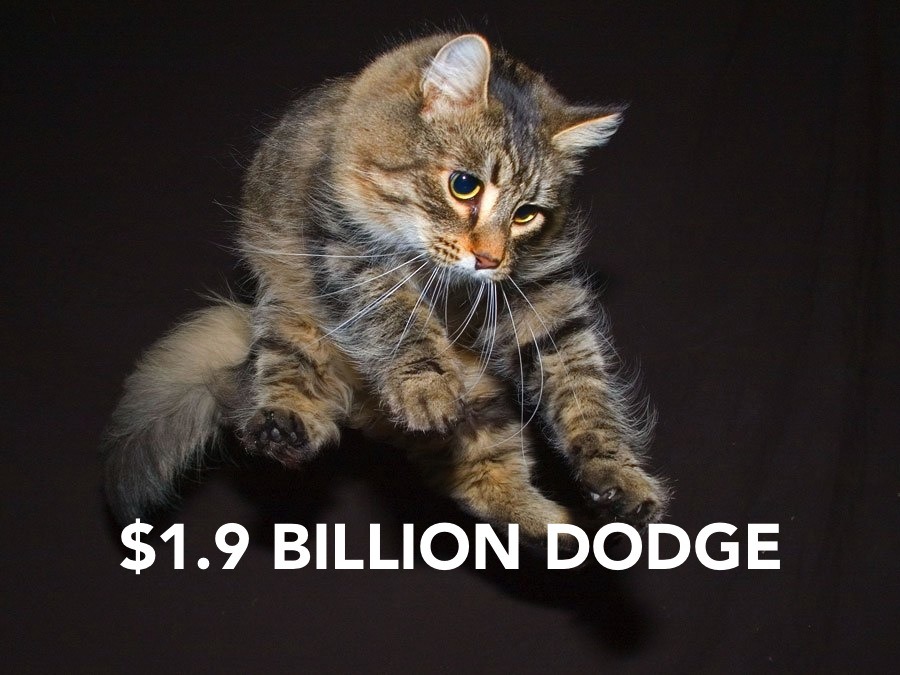
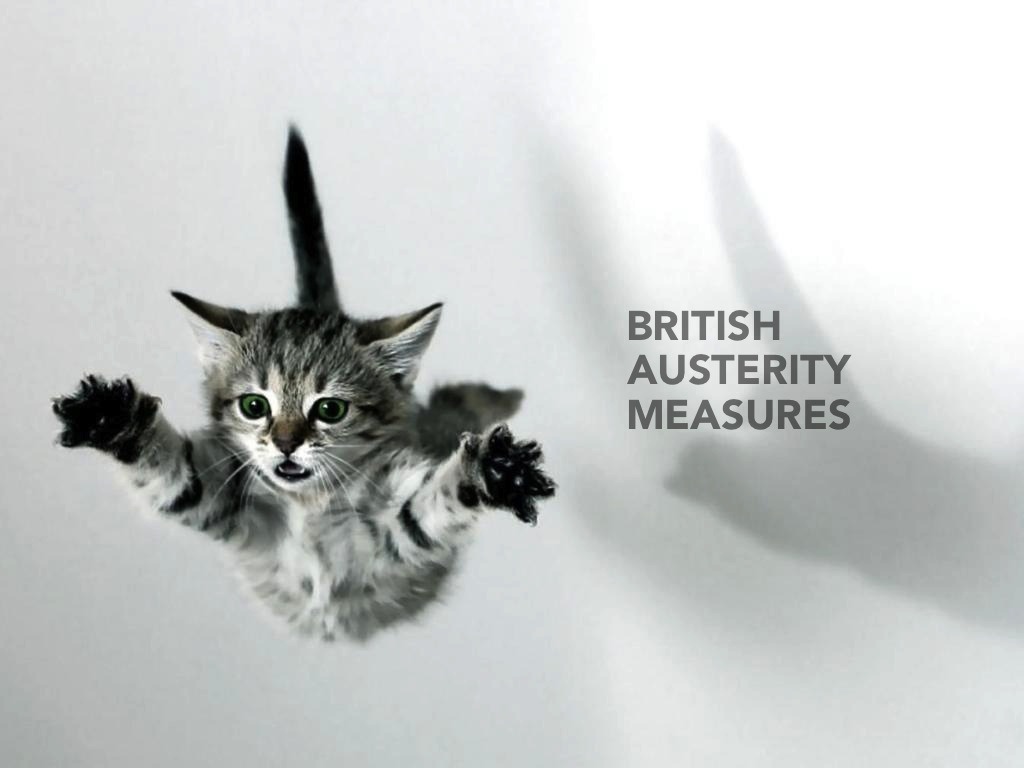
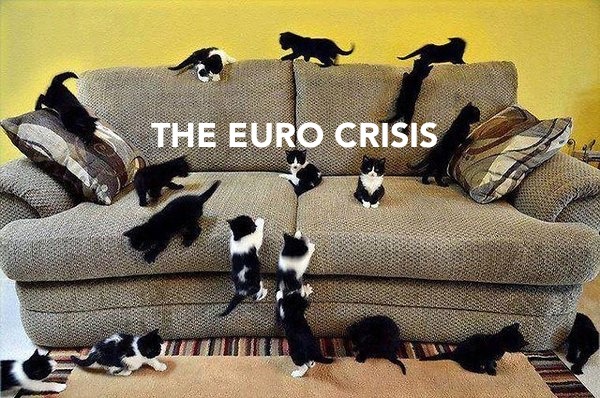
    International Tax as Depicted by Cats

    Kevin Jon Heller linked to international relations as depicted by cats, which I should have avoided.  But then there were these ones depicting international tax, so of course I couldn't resist (apologies for the language in the last one):


    Wednesday, 12 December 2012

    IGA flurry shows US is locking down on FATCA

    A recent flurry of signed IGAs and press releases on ongoing negotiations suggests the US is acting tremendously quickly and even brazenly on FATCA. Almost as if they are trying to get this all nailed down before anyone outside the US government has time to study it and think it through. This is absurd, considering the enormity of what FATCA is trying to do--an enormity that is acknowledged in the IGAs themselves merely as "issues"--issues involving taxpayers' inability to comply with US law because it would involve breaking the law in their own country. The hubris is breathtaking. But it is virtually invisible as a policy matter because it is all wrapped up in the idea that we are cracking down on the world's tax cheats, and who could be against that?

    The speed and intensity on FATCA is troubling though, when we consider the lock-in nature of the agreements in terms of future flexibility on the part of the US. To see what I mean by this, let's take a look at the IGA Mexico signed on November 19.  I blacklined it against the US Model 1A (reciprocal) IGA: it reads as virtually identical. Interesting, as the agreement with Mexico has apparently been two years in the making and the model IGA came out this past July. I find it amazing that the model was apparently so easy to write and these IGAs so easy to conclude--Denmark signed one just four days earlier. Contrast that to the US model double tax agreement, which was written some three decades after its first double tax conventions appeared (and which only gets updated every six years or so) and the average five year span it typically takes to get a new tax convention negotiated and signed. In terms of Treasury resources, it looks like a lot more time is spent on FATCA these days than on new tax treaty protocols, multilateral information sharing standards, or perhaps anything else.

    The first thing the parity between the model and the actual agreement with Mexico suggests is that the terms of agreement on FATCA are absolutely non-negotiable.  This is a put up or shut up, my way or the highway moment: sign our template or face sanctions in the form of draconian and even unprecedented (such as in the treatment of gross sales proceeds) gross basis withholding. That's hard enough on its own but it is also bad news for other countries that might see themselves in a position to drive a hard bargain with the US.  It is bad news not only because it looks like the US will not deviate from its chosen path right now, but also because, perversely, the US has included a "most favored nation" clause in the FATCA agreements--something almost unheard of in double tax agreements, because it makes a better deal for one a better deal for all.  The language is in article 7 of the model, and it reads virtually identically in the US-Mexico agreement, the UK agreement, and the Denmark agreement (signed Nov 15 2012).
    Consistency in the Application of FATCA to Partner Jurisdictions 
    1. [FATCA Partner] shall be granted the benefit of any more favorable terms under Article 4 or Annex I of this Agreement relating to the application of FATCA to [FATCA Partner]  Financial Institutions afforded to another Partner Jurisdiction ....   
    2. The United States shall notify [FATCA Partner] of any such more favorable terms and shall apply such more favorable terms automatically under this Agreement as if they were specified in this Agreement and effective as of the date of the entry into force of the agreement incorporating the more favorable terms.  
    The implication is that the US is tying its own hands against the possibility of making any different deal for any other country.  Now why on earth would they do that? 

    Purely, I think, to drive home the unilateral message. Information sharing is no longer going to be multilateral, engaged in through international dialogue and consensus. Information is a commodity, the US can apparently afford to extract it on a unilateral basis and without regard to "issues" like other countries' domestic laws, and there will be no spoils for any other country that can't or won't submit to the US standard, even if they themselves are victims of the US' own bank secrecy & notorious apathy when it comes to things like anonymous incorporation. 

    None of this is to say that bank secrecy is good, that information should not be shared among countries. This is not an apology for tax havenry.  I do think information has to be shared if we are to keep taxpayers honest the world over. But it is to say that a unilateral battering ram is not the right answer. The problem of global misconduct by wealthy taxpayers is not solved by the US strong arming to get information that serves itself alone.

    If you'd like to see the blackline I ran, you can download it here. Careful readers will note that in the agreement with Mexico, some periods are followed by two spaces (old school) while others are followed by one (new school), and these are different from the US Model.  So someone somewhere is paying attention to these important details as the US rips through a century long tradition of multilateral information sharing to build its own private empire of information gathering. That's good to know.